Relative clauses
-
Like single-word adjectives, a relative (adjective) clause modifies nouns and answers the question what or which? A relative clause is a type of dependent clause: Tom, who loves baseball, goes to the batting cages every Saturday morning. The relative clause, ”… who loves baseball” modifies the noun, “Tom”.
-
Restricted or defining (essential) relative clauses
-
A restricted or essential relative clause is one that is required to understand the meaning of the sentence.
-
The boy who wore the red sweater won the lottery.
- If the restricted relative clause (i.e., … who wore the red sweater…) were to be removed from the sentence, it would not be clear which boy won the lottery.
-
The school that burned to the ground was being rebuilt due to the generosity of an anonymous donor.
- The relative pronoun, that, always begins a restricted relative clause.
-
The baseball which left Babe Ruth’s bat and landed in the pond outside of the stadium was an instant collectible.
- If the restricted relative clause (i.e., … which left Babe Ruth’s bat and landed in the pond outside of the stadium…) were to be removed from the sentence, it would not have the same meaning.
-
-
-
Unrestricted or non-defining (non-essential) relative clauses
-
An unrestricted (non-essential) relative clause provides extra information and its removal does not interfere with the overall meaning of the sentence.
-
Katie, who loves to play video games, is a good student and seldom misses class.
-
The chair, which was painted red, is a collectible.
-
My biological Mom, who has red hair, loves to visit the beauty salon.
-
Notice in this last example, “My biological Mom…” the omission of the commas. Unrestricted relative clauses require commas to separate them from the rest of the sentences. In the third example, it should read as follows: My biological Mom, loves to visit the beauty salon.
who has red hair,
-
Notice that if this example were left without commas to separate the relative clause, it would be illogical. Since I can only have one biological Mom, I don’t need the relative clause, ”… who has red hair” do distinguish between two or more other Moms since there can only be one (biological Mom). 😉
-
-
-
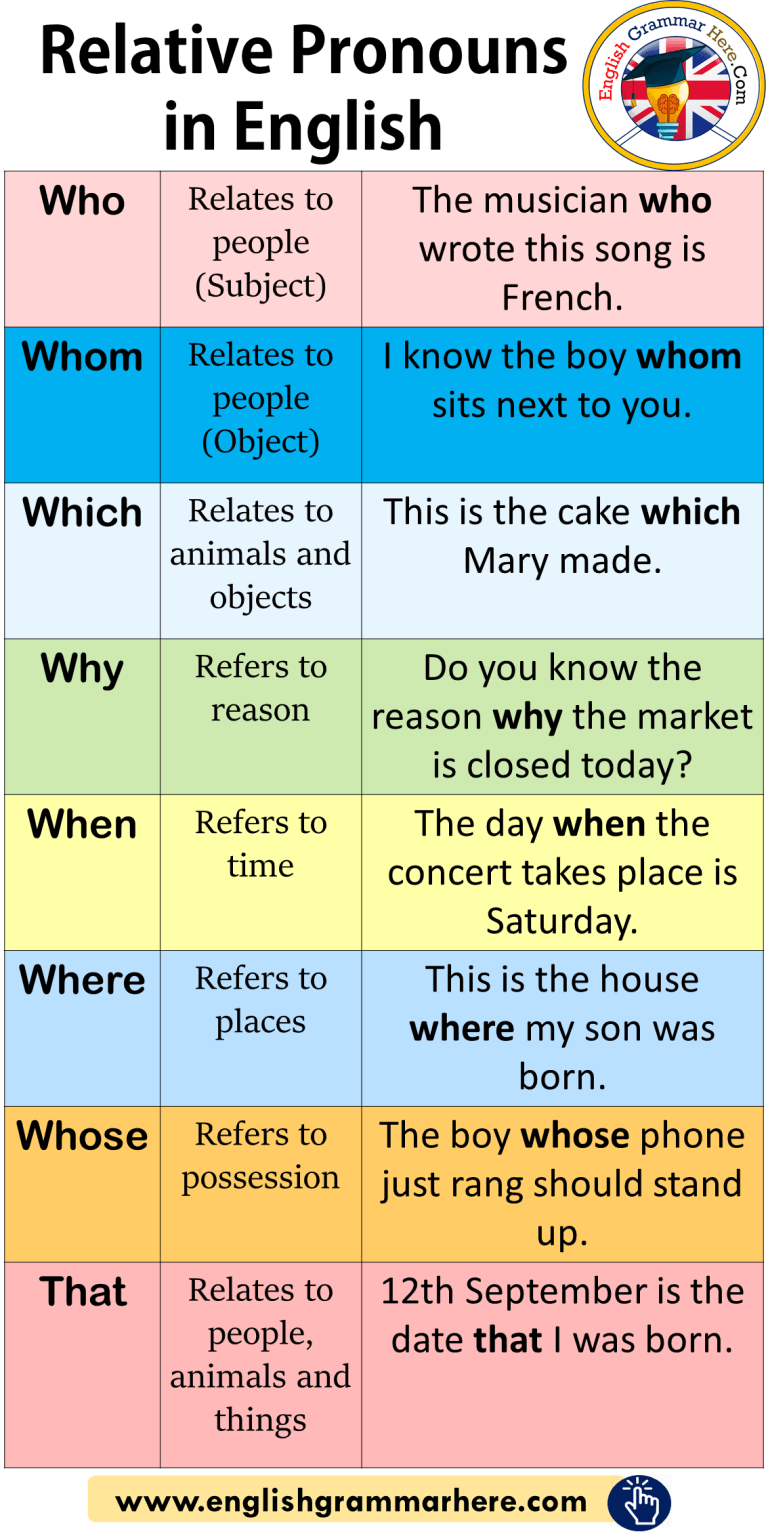
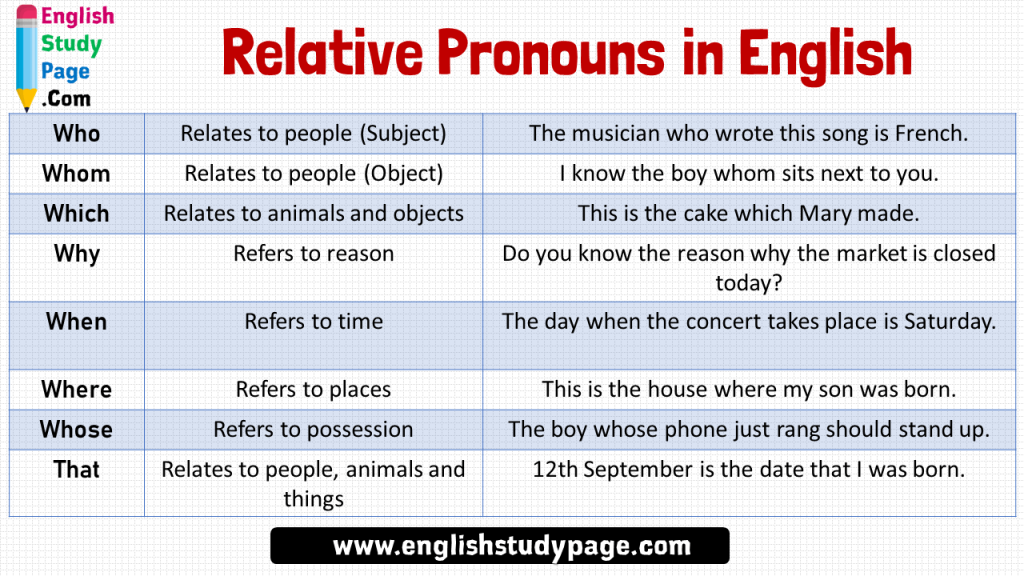
A relative clause usually begins with the following relative pronouns: who, (to/with) whom, which, that, and whose. Others include why, when, where, etc.

Time to practice!
Determine whether a restricted or unrestricted relative clause is being used in each of the sentences below, and use the comma appropriately.
-
The report which contained several errors had to be rewritten.
-
Is this the platform where the train to Edinburgh departs?
-
Their dog whose barking annoys the neighbors is usually kept inside.
-
The manager whom the team respected retired last month.
-
The recipe that I used called for different ingredients.
-
My neighbor Mr. Jones who travels frequently wasn’t home.
-
The student whose phone kept ringing was asked to leave.
-
He remembers the summer of ‘92 when he graduated from university.
-
Any documents that relate to the case should be submitted.
-
We need to hire someone who understands digital marketing.
-
The company’s headquarters which are located downtown will be moving soon.
-
He explained the reason why the project was delayed.
-
We stopped for lunch in Stratford-upon-Avon where Shakespeare was born.
-
This old watch which belonged to my grandfather still works perfectly.
-
She recalled the moment when she first saw the ocean.
-
The participants who complete the survey will receive a gift card.
-
I spoke with Professor Evans whom I’ve known for many years.
-
This is the specific tool which works best for this material.
-
My friend Alicia who is a talented artist painted this picture.
-
Her youngest son whose ambition is to be a pilot is studying physics.